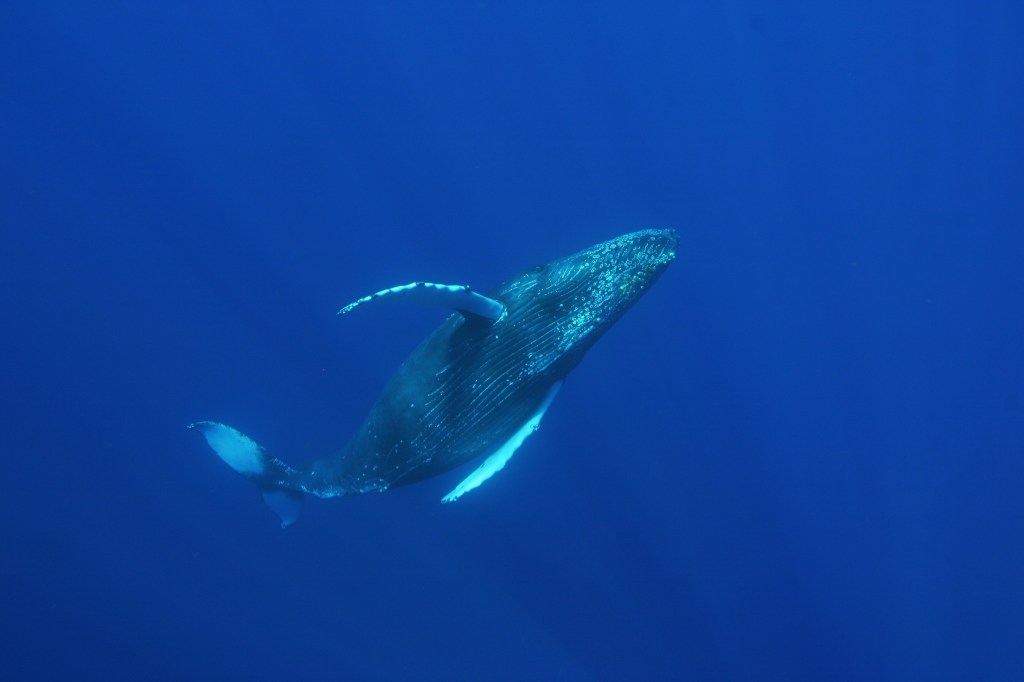
How do whales die? Like humans, whales die in many different ways, but the one that captivated me was drowning. A creature that spends nearly a century roaming the vast ocean, living under water—drowned by it.
A whale’s drowning bears a certain resemblance to a human being’s natural death. In both, an aging body can no longer perform the movements required to keep itself alive. Just as an old person’s body may cease its vital work during sleep, there may come a moment when an aging whale can no longer complete that final journey to the surface.
A whale’s long life unfolds within a vast rhythm: dive, rise, breathe. To stay alive, it must return to the surface again and again. Humans, too, sustain life through repetition: wake, wash, eat, sleep. This repetition is the rhythm given to every living thing: the rhythm of life. For as long as we are alive, we cannot free ourselves from it.
Sometimes this ordinary, seemingly trivial rhythm feels like an enormous burden—a waste of time. Washing our bodies, trimming our nails, checking the weather before getting dressed: these small but unavoidable acts can feel like chores that stand in the way of life itself.
That was how I felt when depression, burnout, and homesickness descended on me all at once. The hardest moment came each morning, when I opened my eyes and, as soon as consciousness finished loading, realized that I was still alive. There was a time when even the most basic acts—taking a shower, feeding myself—felt like mountains I had to climb. When I imagined repeating these tedious, meaningless tasks for the rest of my life, I sometimes wished the end would arrive and release me from them all.
Now I know that the end is closer than we think. And all these things, too, will happen for the last time. The death of a whale taught me that.
Even now, when life becomes difficult to bear, I picture a whale taking its final breath and sinking toward the ocean floor. I imagine its last descent, the body falling slowly because it no longer has the strength to return to the surface. Perhaps, for the first time in its life, the whale will reach the deepest part of the sea.
Deep-sea creatures will gather around its motionless body. Even after the flesh and fat have been consumed, the lipids stored within its bones will continue to nourish microbes and invertebrates. For decades, the whale’s dead body will sustain an entire community of life in the deep. The rhythm that once kept the whale alive is reborn as the rhythms of countless other lives. In death, the whale becomes the very ocean it spent its life roaming.
Just as the whale makes its final descent, one day I will take the last shower of my life. How grateful would I be for that shower? My final shower in a human body. How precious would every drop of water feel as it touched my skin?
The day I learned about the death of a whale, I imagined that the shower I was about to take would be my last. I normally listened to music or a podcast while I showered, as though those minutes were time that needed to be put to use. But that day, I left the silence unfilled and decided to simply experience the shower itself.
Clean warm water, given to me.
Time to cleanse my body.
The scent of soap.
The refreshing and rejuvenating feeling afterward.
I had never taken a shower like that before. Instead of tucking my hair behind my ears as I usually did, I let it hang loose, closed my eyes, and felt the water falling over my body. It felt as though I were standing in the middle of a rainstorm. I must have showered at least ten thousand times in my life, yet I had never felt anything like it. Simply thinking about death had transformed a sensation I had experienced ten thousand times. It was mysterious and amazingly alive. I felt the pulsating rhythm of life.
The work of keeping myself alive was not a collection of chores to be finished before life could begin. It was the rhythm created by life itself.
I have decided to live with the knowledge that everything is finite. One day, both the whale and I will be released from the rhythm in which we struggle to keep ourselves alive. Until then, I will try to move with the rhythm of life—to dance even in the rainstorm.
And still, when a day comes where I feel disenchanted with everything, I will return to the image of the whale’s final descent—and to my own lasts.
My last shower.
My last meal.
My last brushing of teeth.
My last time getting dressed.
My last argument.
My last kiss.
My last sunset.
My last goodbye.
My last breath…

